
Strengthening partnerships to address malnutrition in Nampula
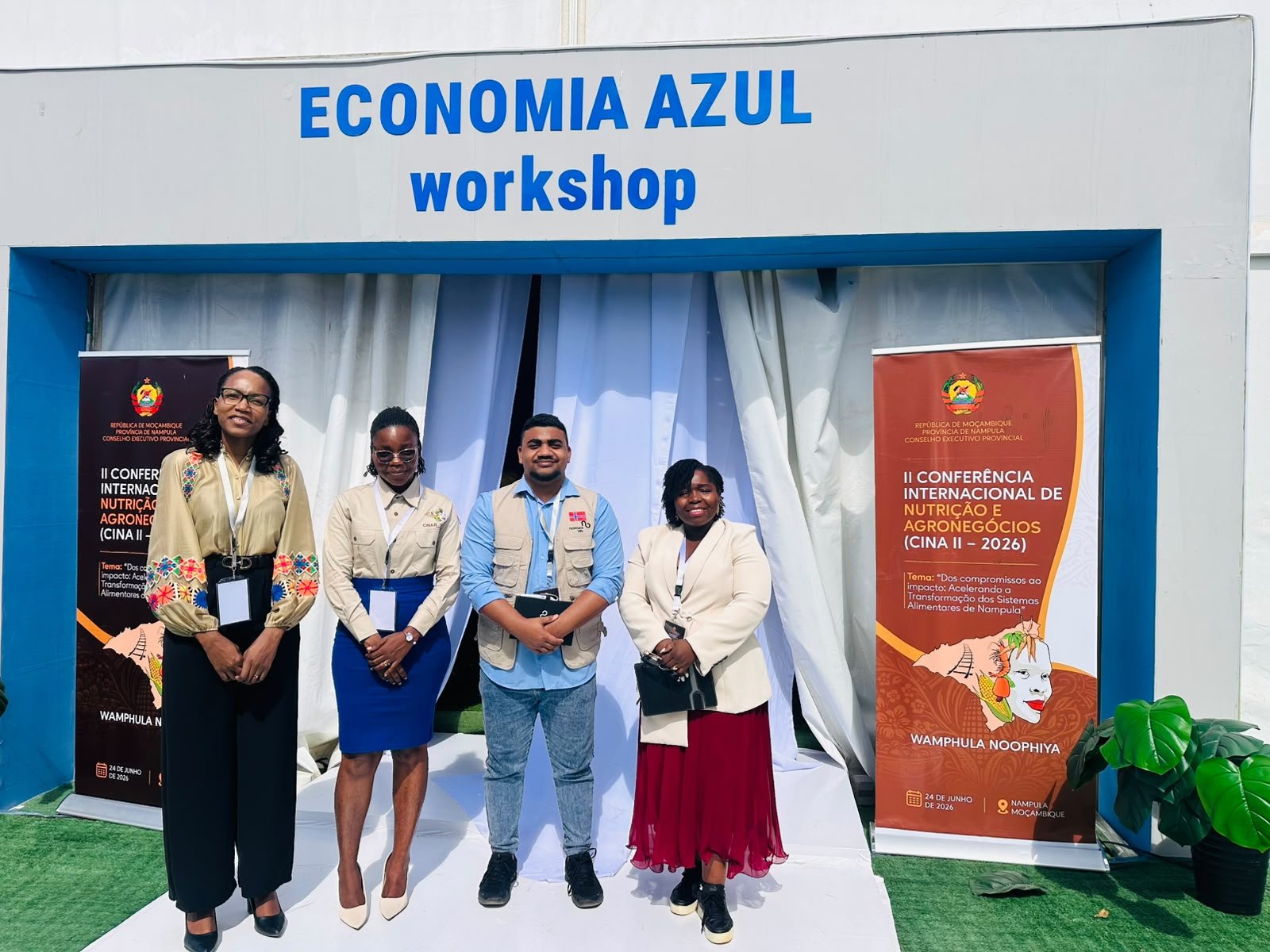
Nampula is among the provinces in Mozambique most severely affected by chronic malnutrition — with 46.7 percent of children under five affected, well above the national average of 37 percent. It was against this backdrop that the city of Nampula, on 24 June 2026, hosted CINA II, the second International Conference on Nutrition and Agribusiness.
In this context, CINA II emerges as a strategic initiative by the Government and its partners to accelerate coordinated actions aimed at reducing malnutrition and removing Nampula from the list of provinces with the highest prevalence rates. The conference provided a high-level platform to translate policy commitments into concrete, scalable interventions that strengthen food systems and improve nutrition outcomes.
The event was officially opened by His Excellency Eduardo Mariamo Abdula, Governor of Nampula Province. It brought together key government representatives and development partners, including Manuel Chicamisse, Provincial Director of Agriculture and Fisheries, Gaspar Cuambe, National Director (GAIN), and Judite Mussácula, Executive Secretary of the Technical Secretariat for Food Security and Nutrition (SETSAN), among other distinguished participants.
Across plenary and thematic sessions, national and international experts addressed critical topics such as sustainable production, climate resilience, agricultural logistics, inclusive markets, investment, and innovation—highlighting the importance of integrated and multi-sectoral approaches to transforming food systems in Nampula.
At this important forum, Norges Vel, together with its partners Aflalivre and Olima Sana, actively participated, reaffirming a shared commitment to strengthening sustainable agricultural value chains and advancing food and nutrition security in Mozambique. Their joint presence alongside the Provincial Directorate of Agriculture and Fisheries underscores the value of public–private partnerships in delivering practical, community-level solutions.
The engagement at CINA II reinforces a shared vision: to move from commitments to measurable impact, contributing to the reduction of malnutrition, enhancing climate resilience, and improving livelihoods across rural communities.